Back to guides

PvP Team Composition Guide — ABC/ABB/AAB Formations

PvP teams are 3 Pokémon. The role of each slot and the type-placement pattern (formation) decide your win rate. New to PvP? Read the PvP Mechanics Guide first.

Team Roles — Lead / Safe Swap / Closer

Each of the 3 slots has its own job.

Lead
Lands the first Charged Move the fastest
  • Fast Move with quick energy gen (Thunder Shock, Mud Shot, etc.)
  • Broad coverage, few weaknesses
  • Must threaten immediately with shield bait
Safe Swap
The neutral Pokémon that loses the least when swapped in
  • Resists or stays neutral against many types (Steel, Fairy, Dark, etc.)
  • Must survive when the opponent forces a swap with bait
  • You don't need to win — just stall for time
Closer
Comes out last to clean up
  • Dishes out big damage in a shieldless endgame
  • High bulk and finishing power (Tyranitar, Bastiodon, etc.)
  • Types with fewer weaknesses are safer

Formations — How to Stack 3 Types

"ABC / ABB / AAB" are not acronyms — they describe how the three Pokémon's types are arranged across the slots. Think of soccer formations like 4-4-2. There is no single best formation; it's a tactical choice.

ABC — Broad Coverage with 3 Distinct Types

The classic balanced formation: three Pokémon with different types so at least one always has a favorable matchup against any opponent.

How It Works

Weakness spread
The three Pokémon's weaknesses don't overlap, so no single type can counter the entire team.
Straight matchup play
A vs A, B vs B, C vs C — the most intuitive operation without complex bait plays.
Easy to build
Picking any three bulky meta Pokémon works. The best formation for beginners to try first.

Reference Example

A
Quagsire
Quagsire
WaterGround
B
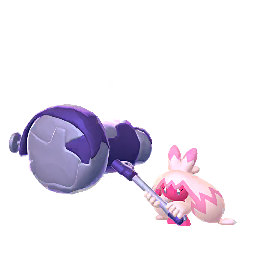
Tinkaton
Tinkaton
FairySteel
C
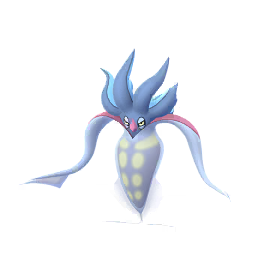
Malamar
Malamar
DarkPsychic

All three primary types are different. Quagsire is weak to grass; Tinkaton to ground, fire, fighting; Malamar to bug, fairy — and they cover each other's weaknesses.

Game Flow

A vs their A → B vs their B → C vs their C. Resolve matchups by type advantage in order.
💡 Each pick's bulk is critical. If C is fragile, you can't survive 1-vs-2 scrambles. Maximum variance coverage, but no decisive finisher.

ABB — Backline Doubles Up + Comeback Specialist

One lead (A) plus 2 backline Pokémon sharing the same type (B). The early swap is the core strategy: bait out the opponent's counter, burn it down, then sweep with the surviving B.

How It Works

Weakness coverage
The B type absorbs the lead's weaknesses, or the two backliners share weaknesses so even if one falls, the other keeps pressuring with the same type.
Bait & sweep
Swap to 1B → opponent answers with B's counter → 1B and their counter trade down → the second B sweeps the cleared environment.
Type stacking pressure
Two same-typed attackers mean one counter only blocks one — the second keeps the same coverage going.

Reference Example

A
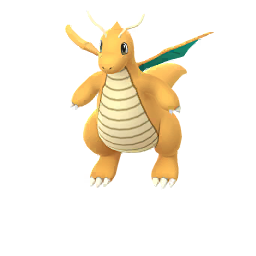
Dragonite
Dragonite
DragonFlying
B
Registeel
Registeel
Steel
B
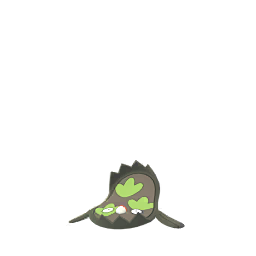
Galarian Stunfisk
Galarian Stunfisk
GroundSteel
Shared Frame:Steel

Dragonite's weaknesses (Fairy, Ice, Dragon) are both absorbed by the dual-Steel backline (Registeel + Galarian Stunfisk). A single Fairy from the opponent can't block both.

Game Flow

Lead with A → swap to 1B if unfavorable → opponent's counter comes in → A returns to clean it → 2B sweeps.
💡 The counter to ABB is another ABB. Because the backline shares weaknesses, an opposing ABB built around that exact weakness can demolish you. Your lead A must survive until the end for the comeback to land.

AAB — Lead Consistency + Hidden Counter-Attack

Two same-typed Pokémon in the lead and middle slot (A), with a different type (B) as the closer. You hold the lead, disrupt the opponent's early cycle, and keep B hidden for the late counter-attack.

How It Works

Lead consistency
Winning the lead matchup pushes win rate near 90%. A rock-paper-scissors formation that rewards a versatile lead.
Same-frame pressure
Two of the same type in the front two slots means even after the opponent counters, the second A keeps the same pressure going.
Counter-attack reserve
Keeping B hidden makes it hard for the opponent to plan around it — the surprise pick closes the game.

Reference Example

A
Quagsire
Quagsire
WaterGround
A
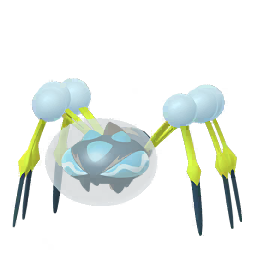
Araquanid
Araquanid
WaterBug
B
Tinkaton
Tinkaton
FairySteel
Shared Frame:Water

Quagsire + Araquanid (both Water frames) pressure the opponent's Steel, Fire, and Rock types. Tinkaton (Fairy/Steel) stays hidden until the end as a counter-attack against Dragon, Dark, or Fairy threats.

Game Flow

Hold A in the lead → swap to 1A vs their counter → keep stacking same-frame pressure → close with B at the end.
💡 Lead consistency is everything. If you lose the lead matchup outright, unlike ABB it's hard to flip the game. If ABB is 'defend first, counter-attack,' AAB is 'score one goal and lock it down.'
References: JaengyoGO "What's ABB?" GO Battle League Formation Briefing, PvPoke, Poketory